
Line 6 Helix vs. Traditional Pedalboard

Alex Velte • January 19, 2026

Share this article

Line 6 Helix vs. a Traditional Pedalboard for Sunday Mornings


If you’re a worship guitarist trying to decide between something like a Line 6 Helix and a traditional pedalboard, you’re probably just looking for something that sounds good, is easy to manage, and doesn’t turn Sunday morning into a science experiment. Both setups can work really well — but they solve different problems, and that’s usually where the decision actually gets made.


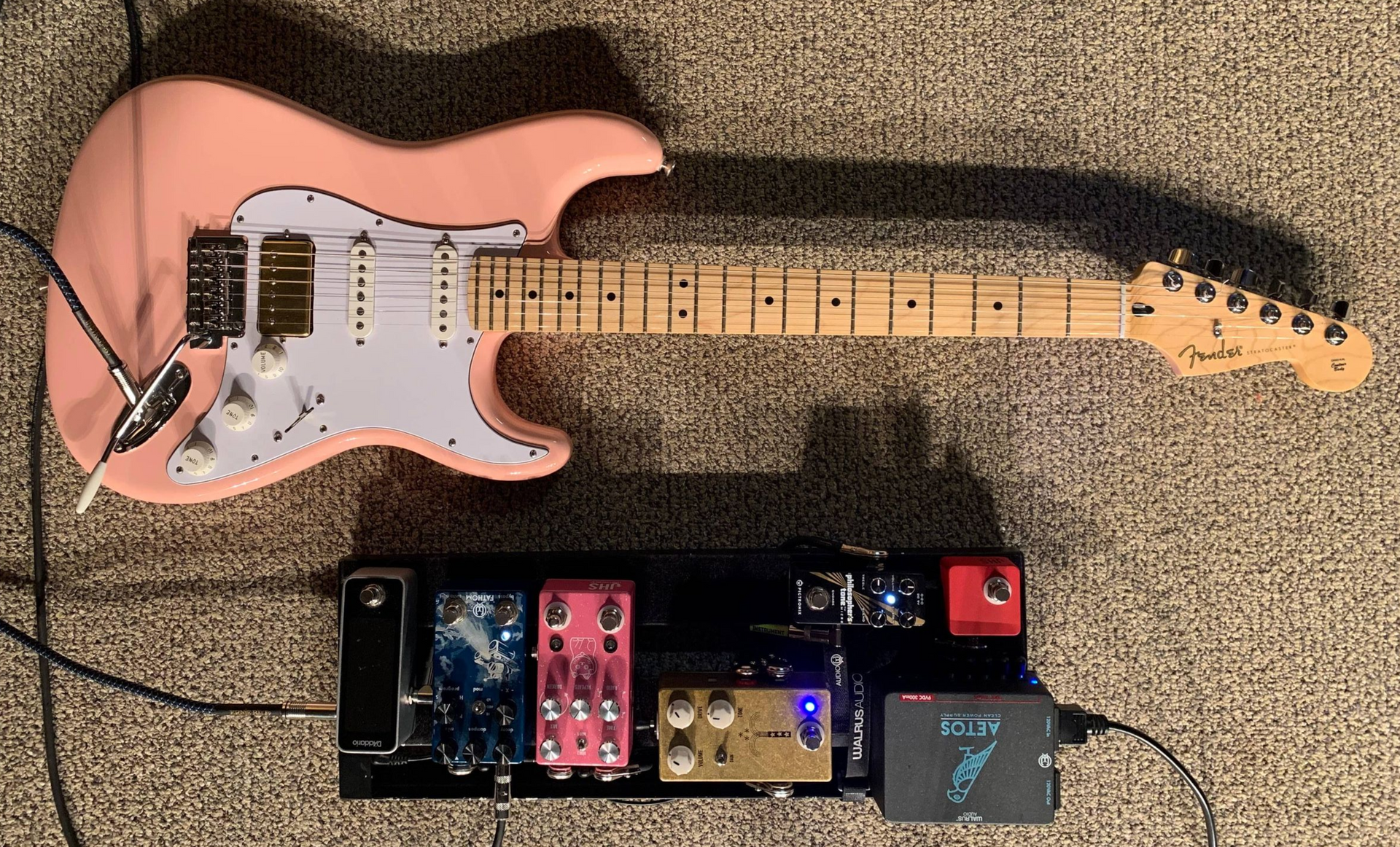
Traditional pedalboards are undeniably cool.


Real pedals, real knobs, real amps — there’s something inspiring about that setup. A lot of great worship guitar tones come from traditional boards, and if you already have one you love, that’s a perfectly valid place to be.


That said, after spending time with both setups, the Helix ends up making a lot of sense for many worship players, including myself. Let me explain why.


Consistency week to week


One of the hardest parts of playing on a worship team is how different things can feel from week to week. Different rooms, different sound systems, different volumes. A tone that felt great last Sunday can feel off the next. With a Helix, once your sounds are dialed in, they stay the same, for the most part. At that, if you have to make adjustments, they are easy to make globally (i.e., if you are in a new room with a sound system that requires your to make global EQ settings). For the most part, I show up, plug in, and my tones behave the way I expect. That consistency removes a lot of guesswork and helps with focus on actually playing the parts well.


Less Setup, Fewer Surprises


Traditional boards come with more pieces: pedals, cables, power supplies, amps. None of that is bad, but it does mean more things that can fail or need attention (and it's just SO fun to try and find out WHICH cable isn't working). The Helix simplifies all of that into one unit. You’re not chasing noise, dead cables, or level changes five minutes before rehearsal. Especially if you’re serving regularly, that simplicity is a big win. For me, I show up on Sunday morning, plug 3 cables in, power on, and I'm ready to go. At that, my 2-year-old could have turned every knob on my Helix while I was sleeping the previous night and it wouldn't matter. The settings are saved and ready to go.


Cost Adds Up Faster Than You Think


"But the Helix is like, $1000+" -- Yes, the Helix is rather expensive as an up-front cost.


However, a solid pedalboard full of great pedals, plus an amp/amp modeler, adds up quickly. Even modest setups can get expensive over time. The Helix gives you amps, effects, and flexibility in one box, and for a lot of players, it ends up being more affordable in the long run. Plus, the used/refurbished market has so much out there for those who are willing to dig a little. I got my Helix LT used (with a solid return policy) for $850 a few years ago, when they were around $1,100 new.


A Fair Take


Spending time with real pedals is helpful. It teaches you what good tones actually feel like under your fingers. But ending up with a Helix after that isn’t settling. When it’s set up right, it sounds very real and fits a worship environment extremely well. If your goal is showing up prepared, confident, and ready to play your part on Sunday, the Helix is a really solid choice.

Recent Posts